
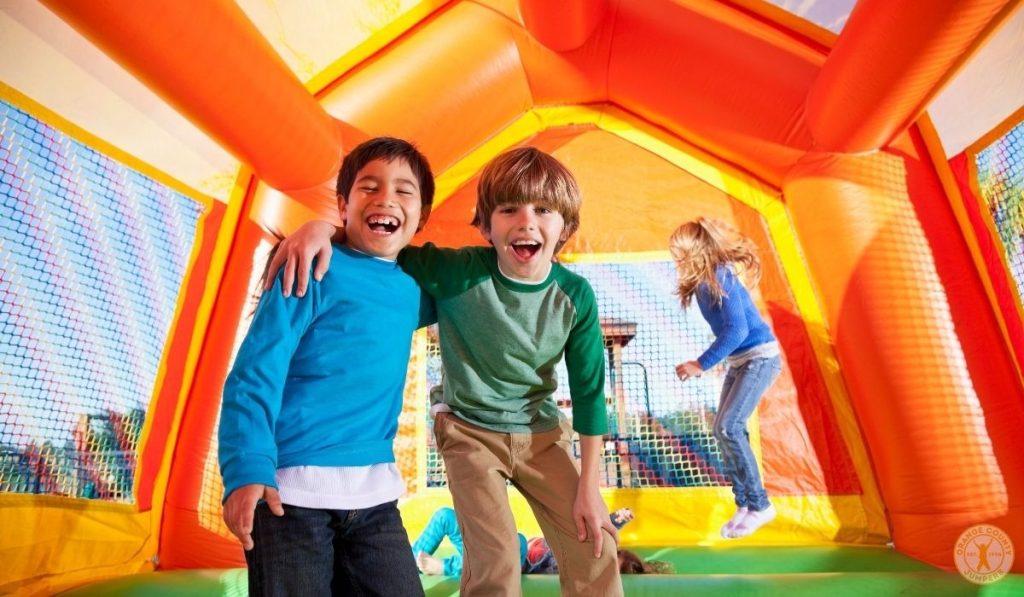
You’re a parent in Southern California, and you’re planning a backyard birthday. Then you jump online and get buried under listings for bounce house, moon bounce, bouncy castle, and jumpy house.
Which one do you actually need? Here’s a stat to think about. In 2018, the CPSC estimated more than 18,000 injuries associated with bounce house products that landed kids in hospital emergency departments.
So wondering if there is a technical difference makes sense. Or are these all the same product?
Here’s the direct answer: These terms describe essentially the same type of inflatable structure. The naming differences come down to regional history and visual shape, and that’s the honest truth about the moon bounce vs bounce house in Orange County question.
From our experience, most people have no idea that the moon bounce got its name from the Space Race.
We covered when did bounce houses become popular in a previous article. You’ll also want to read about the types of bounce houses next.
And if you really want to impress your guests, check out our post full of bounce house facts. For now, let’s focus on what’s called what and how to throw a safe party in 2026.
Short Summary
- Moon bounce and bounce house are the same type of inflatable structure. The naming difference comes from regional history.
- Commercial-grade vinyl units handle parties. Retail nylon units are for one child at a time.
- California wind limits for 2026: 15 to 25 mph. Units must be evacuated above that range.
- Grass setup uses stakes. Concrete or pavement uses sandbag ballast.
- Always ask your rental company about insurance, permits, and written safety instructions.
The Origin Story: Why Is It Called a Moon Bounce?
Let’s travel back to a time before inflatables ruled backyard parties. Do you know that one curious engineer changed the party world forever?
The 1959 Invention by John Scurlock
John Scurlock was a mechanical engineer. He designed air-inflated vinyl covers for tennis courts. But his employees kept trying to jump on the prototypes for fun. Scurlock leaned into it instead of shutting it down. (Smart guy, right?)
He called his first version a “space pillow.” Then he tried “moon walk.” Neither name stuck permanently. But they planted a seed!

The Space Race Connection
Here’s where the space craze enters the story. The 1960s put astronauts on every TV screen. Moon landings felt like magic, and weightlessness captured the public imagination. Have you ever wondered what zero gravity feels like?
Jumping inside an enclosed inflatable came pretty close. That bouncy feeling mimicked low gravity perfectly. The phrase “moon bounce” stuck because it bottled that excitement of the era. A parent in 1969 could say, “Try the moon bounce,” and every kid understood the assignment.
How Regional Names Took Root
So why do we have so many names for the same thing? The term “moon bounce” dominated the East Coast and Mid-Atlantic. People there also say moon walks (plural). Drive out west to California, and you hear jumpy house or bouncy house.
The UK and Australia brought us bouncy castle and jumping castle. However, all these words describe essentially the same product. The name tells you where the speaker grew up. It doesn’t tell you what they are referring to in terms of design.
So when someone asks about moon bounce vs bounce house, the real answer is geography, not hardware.
The Fun Starts Here!
Bounce House Styles Available in 2026
Now that we settled the naming mess, let’s talk about hardware. What can you actually rent this year? The range of houses has exploded.
Classic Bounce Houses
You know the look. A square or rectangular footprint. Primary colors and mesh walls. We universally call this a bouncy house, inflatable bounce house, or just a bouncy castle (if it has turrets).
These are best for younger kids. They also fit tight backyard spaces. A parent once told us, “I only have 12 feet of lawn.” No problem—a classic unit works fine.
Castle-Themed Units
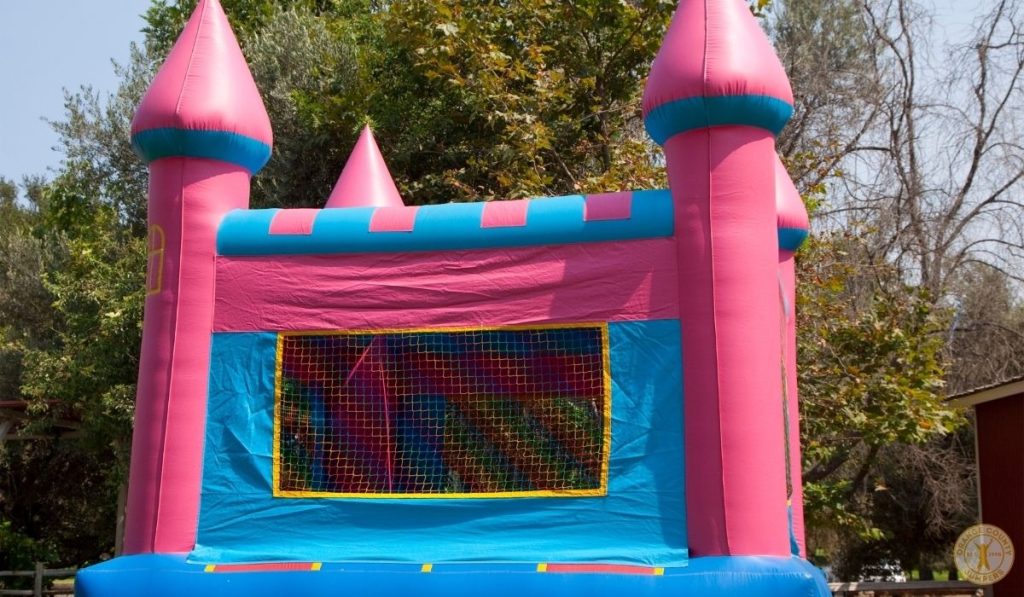
Pointed turrets, pillars, royal aesthetics. Kids lose their minds over these. We market them as a jumping castle or backyard castle. They shine at themed birthday parties. Think princess themes or knight adventures.
One family even rented one for a medieval school event.
As C.S. Lewis said, “Someday you will be old enough to start reading fairy tales again.” These units make that day happen early.
Combo Units With Add-Ons
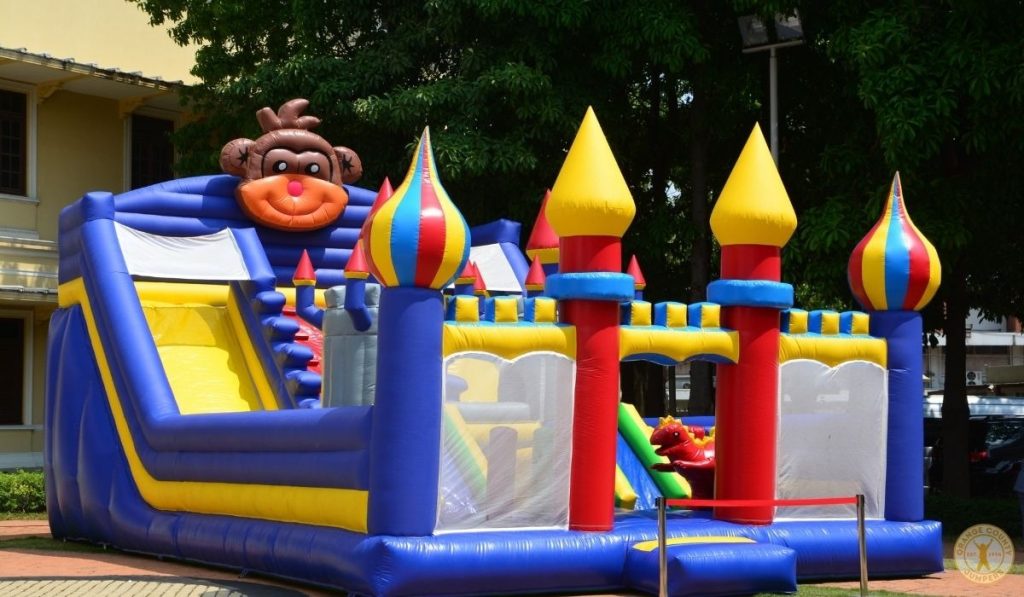
Older children get bored with open bouncing. They prefer a challenge, so combo units add built-in slides, climbing walls, basketball hoops, and obstacle courses. These are suitable for kids ages 7 to 12.
But note the footprint. A combo unit needs more space, so it’s better to measure your yard before booking. We once delivered a slide combo to a driveway that was two feet too short! That was an awkward conversation.
Large-Scale Event Equipment
Now we enter the big leagues. Multi-tiered obstacle courses. Interactive games. Tournament-style setups. These are opposed to the small 4–6 kid rotation units. Schools, churches, and corporate family days love this gear. The shape is less a box and more a jungle.
They keep large crowds moving. So which style fits your party? That depends on your guest list and your lawn. But one thing is certain. We have a jumpy house for every age!
2026 Safety Standards and What to Check Before You Book
This section separates the pros from the amateurs. Your party’s safety depends on three things: the material, the weather, and the crew.
Commercial Vinyl vs. Retail Nylon
Not all inflatables are built the same. Cheap retail nylon units come from big box stores. They are designed for one child at a time. (Think backyard playdates, not parties.)
Commercial grade polyvinyl chloride or vinyl is different. This material handles multiple kids plus adult weight ranges.
We learned this lesson after a client brought a store-bought unit to a birthday. It tore within an hour. Always rent commercials. Backyard retail units can’t handle party-level traffic.
Wind and Weather Limits
California weather changes fast. Under the state’s Division of Occupational Safety and Health (DOSH) guidelines and ASTM F770 updates for 2026, units must evacuate when wind gusts exceed safe limits. That limit ranges from 15 to 25 mph depending on the unit.
Reputable rental company operators monitor forecasts. They will reschedule if conditions turn risky.
Note: Ask about cancellation and rebooking policy before you pay a deposit.
Anchoring and Setup
Ground type changes everything. Grass installations need heavy duty stakes driven deep. Concrete or asphalt requires heavy sandbag ballast configurations to counter tipping. The setup crew should walk your site before unloading the equipment.
We bring different factors into every truck. A sloped lawn, or a narrow driveway? We note that immediately and adjust the anchor pattern. Never let a driver drop a unit without a site survey.
Supervision and Age Rules
Here’s what CPSC data consistently shows. Overcrowding and unsupervised use cause more injuries than equipment failure. Not the vinyl tearing, not the blower stopping. A responsible adult needs eyes on the unit at all times.
We tell every client: designate a “bounce watcher.” Separate younger children from older kids when possible. Mixing age groups is the most common cause of bumps and bruises. One distracted parent can lead to a crying toddler.
The Rental Company Checklist
Ask these three questions before you sign anything.
- Does the business carry full commercial liability insurance?
- Is the provider registered to operate at local municipality parks and public locations?
- Will they provide written safety standards instructions at setup?
A real rental company says yes to all three. We also encourage you to contact us directly with any service questions. Experience remains the best teacher. And we have plenty of that!
Choosing the Right Inflatable for Your Event
You know the safety rules. Now let us pick the perfect unit. These three steps keep your planning simple.
Measure Your Space First
Grab a tape measure. Safe setup requires a clear perimeter buffer of 3 to 5 feet. Look up for low-hanging tree branches and power lines. Look sideways for fences. Then check your gate width. Large units often won’t fit through a standard 36-inch side gate.
Confirm your lawn or driveway dimensions before you browse images online. It saves everyone a headache.
Match the Unit to the Age Group
Toddler-specific units have lower walls and smaller steps. The bounce zones are softer too. Elementary-age kids do well with combo units that mix bouncing and slides. Meanwhile, tweens and older kids stay engaged longer with obstacle courses or interactive games.
Opting for the wrong range of difficulty leads to bored kids or scared little ones. A five-year-old might refuse to enter a castle unit designed for ten-year-olds. So match the gear to the guest list.

Build Around Your Budget
Standard square bounce houses are the most wallet-friendly option, with entry-level setups starting at just $159. Themed options sit in the perfect mid‑range, while premium combo units featuring climbing ramps and slides typically range from $200 to $270.
Naturally, massive multi-player obstacle courses or large water units scale higher due to their footprint and delivery complexity.
The idea of creating a full backyard carnival is appealing—we get it. But staying realistic with your space and budget is easy here.
A modest budget under $200 secures a classic daily standard jumper rental, while upgrading to a deluxe castle combo with an integrated slide fits comfortably well under $300.
Planning ahead makes the whole hassle‑free experience possible. Fun doesn’t have to break the bank.
As Benjamin Franklin said, “Well done is better than well said.” So measure your yard, match your theme, and pick a tier that works for you. Then let us handle the heavy lifting to make your event unforgettable.
Final Thoughts
So here’s the truth. Moon bounce and bounce house are the same thing. Different names from different places. What really counts is commercial-grade gear, crews who watch the weather, and a solid safety setup.
That’s how you get a hassle-free experience. That’s how you keep the fun rolling. We want your event to be unforgettable and memorable for all the right reasons. Experience remains the best teacher.
So bring your family over to our services page. Contact us when you are ready to check dates or browse the fun. Visit our homepage to see what’s available. Let’s make your party a hit!