
The bounce house industry is booming. The U.S. market sits at roughly $4.51 billion in 2026 and is on track to hit $6.74 billion by 2032 — a steady climb of nearly 7% each year.
That kind of growth tells you one thing: families love inflatable bounce houses, and they’re not slowing down. But here’s the real question parents and children’s event planners ask before they rent: what is a bounce house made of in Orange County, and is it actually safe?
From our experience, material choice is what separates a great day of fun from a genuine safety concern. This guide breaks down the materials, the standards, and what to look for.
Curious about the engineering behind the air? Check out our previous piece, How Does a Bounce House Work? For a history lesson, our next article covers when bounce houses were invented.
And if you want a deep dive into stats and trivia, our post, bounce house facts, has you covered.
Short Summary
- Commercial bounce houses use thick heavy-duty PVC vinyl for strength and durability.
- Residential bounce houses rely on lighter nylon or oxford cloth, which works for occasional home use but wears faster.
- Proper regular cleaning with mild soap, full drying, and careful storage keep units safe and lasting longer.
- Quality materials and careful maintenance deliver better safety for kids at parties.
Commercial vs. Residential Bounce Houses: What Are They Made Of?
Not all bounce houses share the same DNA. Walk into a big box store, then look at our rental fleet. You’ll spot the difference fast. The secret lives in the materials. Let’s break down what separates commercial bounce houses from backyard models.
The Industry Standard: Heavy-Duty PVC Vinyl
Polyvinyl chloride or PVC is the backbone of our industry. We use heavy-duty PVC vinyl exclusively, and here’s why: higher density equals real muscle. This commercial-grade material handles frequent use like a champ. Think puncture resistance.
A kid’s sneaker sole or a stray tree branch won’t ruin your party. Outdoor use means sun exposure and morning dew. Cheaper fabrics degrade fast. Commercial inflatables made from PVC vinyl last for years.
We’ve seen units from 2019 still going strong. That’s the best material for a reason. It’s the industry standard and truly durable. (A little trivia: PVC was invented in the 1920s, but bounce houses didn’t show up until much later.)
Residential Bounce Houses and Their Limits
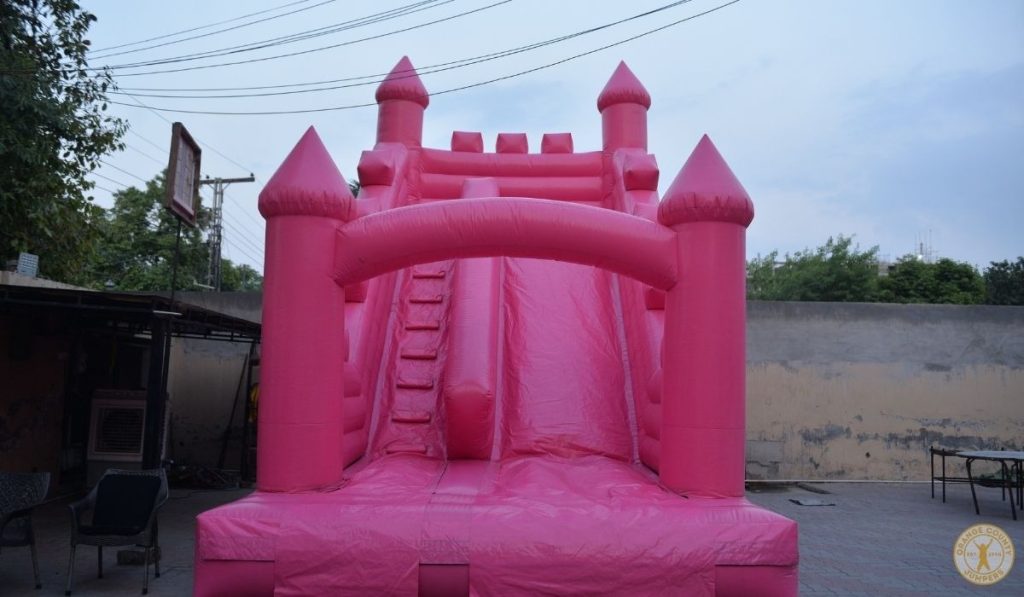
Residential bounce houses use nylon or polyester oxford. You might also see heavy-duty nylon or vinyl or polyester oxford blends. The appeal is simple: lighter weight and lower cost.
Smaller inflatables like these are easy to carry from the garage. But here’s the catch. Oxford cloth doesn’t love repeated stress. We’ve seen oxford cloth rip after just a dozen parties. That’s the main disadvantage.
Nylon and vinyl blends in home units lack the tensile strength we need. They work fine for occasional backyard play, but the rental industry demands more. Way more!
The Fun Starts Here!
Weight Classifications and Material Quality
Ever wonder why rental contracts list weight classifications? That number ties directly to material quality. Commercial-grade equipment uses thicker, high-quality materials. This allows higher weight limits.
For birthday parties with multiple children, you need that buffer. Quality materials also include safety features like reinforced anchors. Safety standards demand these specs.
At Orange County Jumpers, we do not cut corners. Our commercial-grade units match or exceed every safety standards checklist.
The Science Behind Durable, Safe Inflatables
Let’s get a little nerdy. (In a fun way.) Understanding the physics and chemistry of your bounce house helps you sleep better at night. Here’s what actually happens inside those colorful walls.
What “Heavy Duty” Actually Means
Commercial-grade PVC starts at 18 oz heavy PVC. That’s not a marketing word. Heavy duty means measurable thickness. The fabric has water resistance built right in.
Spill a juice box? No problem. Rain shower rolls in? We dry it off and move on. Mildew-resistant coatings stop funky smells after wet weekends. Weather resistance handles Southern California sun without cracking.
These durable materials give superior durability compared to residential fabric. We learned this the hard way. One summer we tested a “heavy-duty” residential unit, and it lasted three months. Our commercial-grade PVC units last three years minimum. That’s the difference.
Heavy PVC vinyl saves money over time.
Reinforced Seams and Heat Welding
Look closely at a cheap bounce house. You’ll see stitches and little needle holes. Those holes leak air. Worse, they tear under stress.
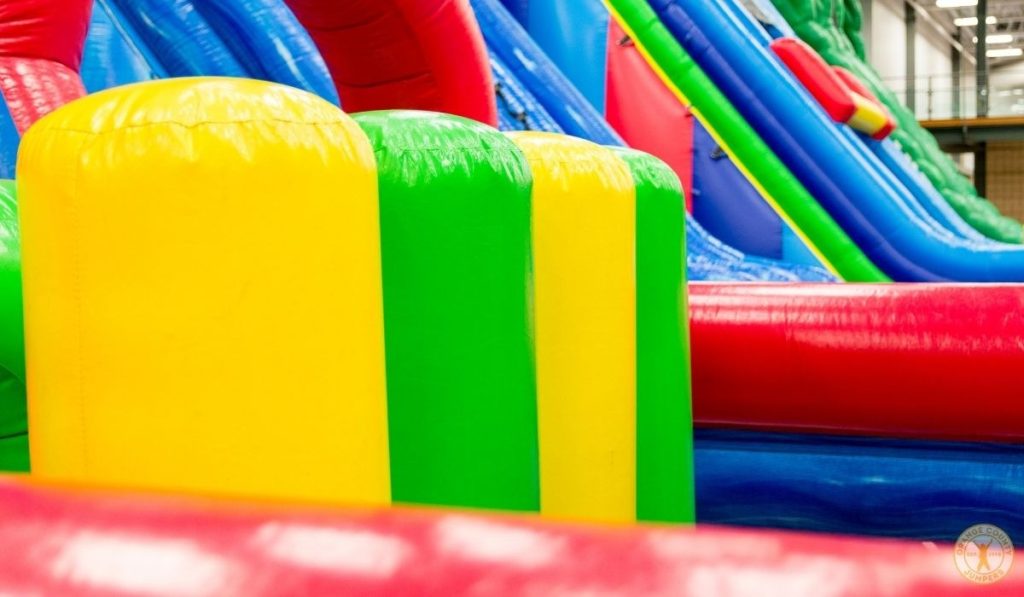
Our commercial bounce units use heat welding instead. This process fuses two pieces of PVC vinyl into one solid layer. No thread, no holes. Reinforced seams create airtight inflatable structures.
Commercial jumpers with welded seams resist small tears far better than stitched ones. (Pro tip: Run your finger along a seam. If you feel bumps like a zipper, it’s stitched. If it feels smooth like a pool float, that is welded.) That smooth feel equals safety features you can trust.
Fire Safety and Health Compliance
Here’s a question most parents forget to ask. “Is this thing fire resistant?” The answer for our units is yes. We only stock commercial inflatables that meet NFPA 701 standards. That means the material self-extinguishes. No weird chemical accelerants!
We also verify lead-free certification. California Prop 65 compliance matters to us. Why? Kids put their mouths on everything. (You have seen it.) High-quality materials never include toxic stabilizers. Safety isn’t just a sticker on the side. It’s a promise.
Our customer satisfaction depends on families walking away happy and healthy.
Built for More Than Just Bouncing
Those same durable materials open the door for extra features. Inflatable obstacle courses need sharp corners and tall walls. Water slides need waterproof seams that laugh at hose pressure.
Bouncy castles with turrets require rigid inflatable bounce houses that hold shape. Obstacle courses and water slides share the same PVC skeleton as a standard unit. That versatility means more fun for your party.
We offer bouncy house combos with basketball hoops or climbing walls. All from the same heavy-duty PVC vinyl. One material, endless possibilities.
How Quality Rental Companies Maintain Their Inflatables
You might wonder what happens after we pack up a bounce house. The answer separates pros from amateurs. Here’s a behind the scenes look at our proper maintenance routine. (Spoiler: it takes hours, not minutes.)
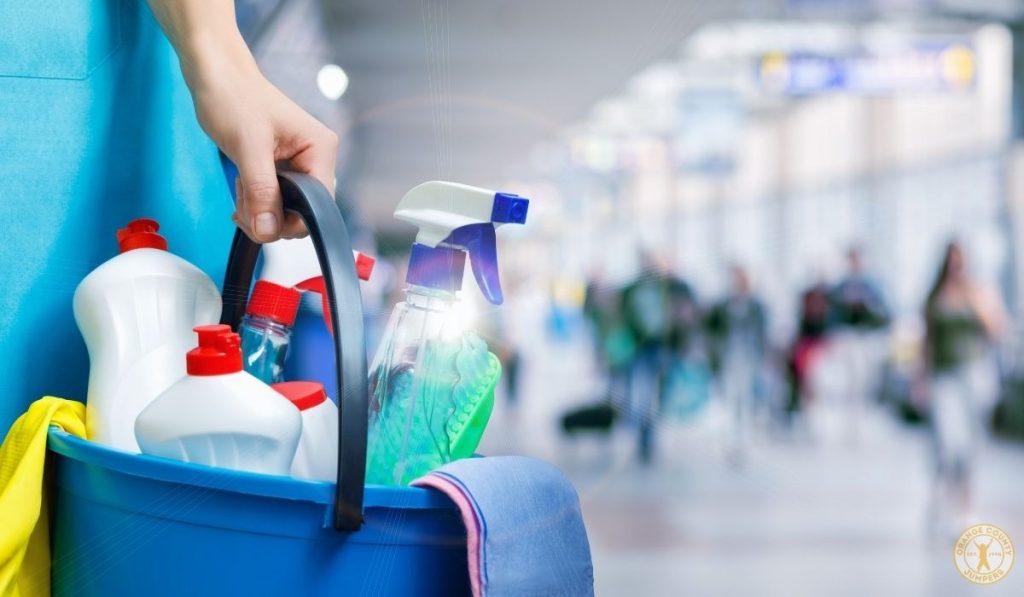
Cleaning and Sanitization Standards
Regular cleaning starts with mild soap and water. That’s it. We avoid harsh chemicals like bleach or degreasers because those agents break down vinyl and shorten its life.
Think of materials like your skin. Harsh stuff dries them out but mild soap preserves the fabric’s flexibility. Easy cleaning happens when you catch messes early. Ketchup from a toddler’s hands? Wipe it fast. Juice spills? Hose it off immediately.
Southern California’s humidity means we fight moisture year round. So we prevent mold by drying every inch after washing. A famous quote from cleanliness expert Marie Kondo: “The space in which we live should be for the person we are becoming.”
For us, that space is a clean vinyl surface ready for your next party.
Proper Storage to Extend Equipment Life
Proper storage sounds boring, but it’s not. Every unit gets fully dried before folding. (We learned this after one mildew disaster years ago. Never again!)
Damp fabric trapped in a bag creates small tears from rot. Worse, it invites mildew-resistant coatings to fail early. Commercial-grade PVC needs a cool, dry space. Certainly, no direct sun, and no concrete floors that hold moisture, either.
Weather resistance stays intact when you store gear correctly. Durable units last longer with this treatment. Cheap rental operators skip this step. They stack wet inflatables in hot garages, and then they wonder why seams split.
We roll ours like giant burritos. Each one gets a breathable storage bag. That extra ten minutes per unit saves us thousands in replacement costs.

Repairing Small Tears and Extending Lifespan
Small tears happen. A misplaced stake or a rough zipper can do it. The difference is how you respond. Commercial inflatables made from durable materials allow field repairs. PVC vinyl patches bond cleanly and hold under pressure when applied correctly.
For event planners who care about vendor reliability, this matters more than most realize. A rental business that repairs and maintains its fleet isn’t just being frugal. It’s reducing waste, extending equipment life, and delivering consistent quality across every booking.
Not only is that environmental responsibility, but also a smart rental business strategy. And that means lower prices for you.
These are practical maintenance tips baked into how we run our end of the rental industry:
- Inspect every seam and surface post-event
- Patch minor damage within 48 hours before stress propagates
- Log repair history per unit to track wear patterns
Longevity is a byproduct of discipline. And discipline is what separates a professional operation from someone renting out of their garage.
Final Thoughts
Now you know what separates a safe bounce house from a risky one. Commercial bounce houses built with quality materials protect your kids, and that‘s the bottom line.
When you rent from us, safety comes first. We take pride in every clean, inspected unit. Looking for a hassle free party in Orange County? Check out our homepage.
Your satisfaction is our reputation. Let’s make your next event a memory your kids will always cherish.