
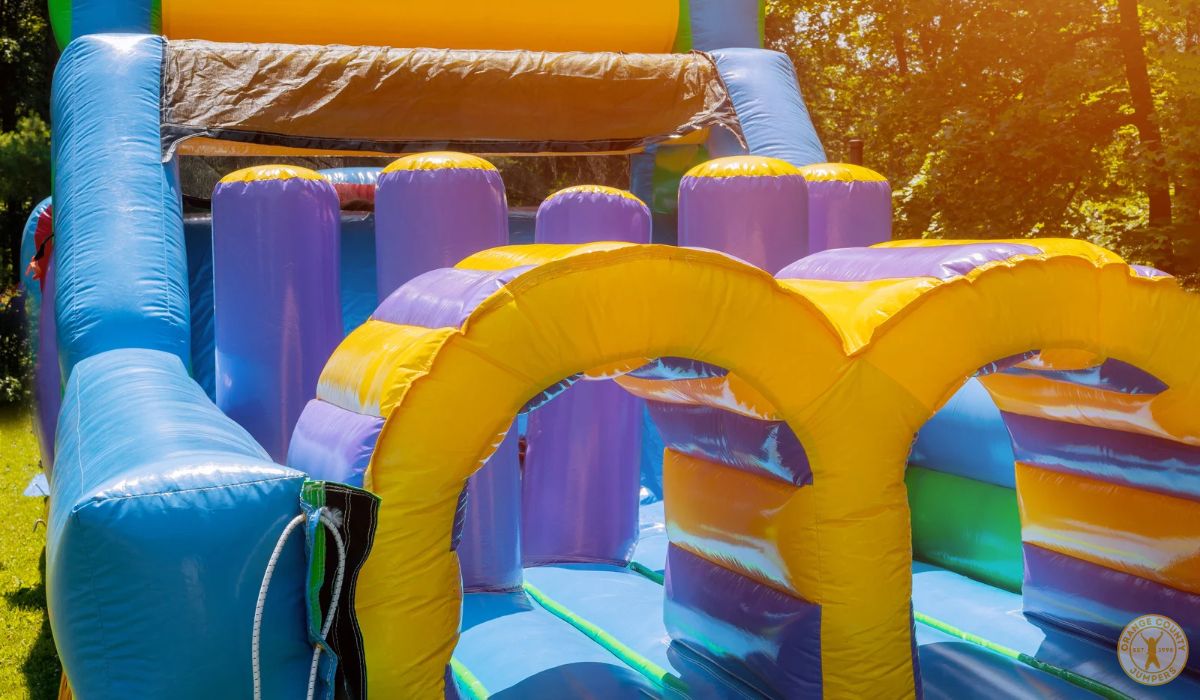

Most 13×13 units hold about 5 to 8 young kids at a time, though the exact number always comes back to the unit’s rated rider count and total weight limit. Bigger or older kids mean fewer jumpers, and the manufacturer’s label is the final word.
When in doubt, undercount rather than push the limit.
Typical Capacity Ranges
| Unit Type | Typical Rated Riders | Typical Total Weight Limit | Best For |
| 13×13 standard jumper | 5–8 | 600–800 lbs | Young kids of similar size |
| 15×15 standard jumper | 8–10 | 800–1,000 lbs | Larger groups of similar size |
| Combo units (bounce + slide) | Varies by model | Often 1,000+ lbs | Parties with a wider age range, in rotating groups |
| Obstacle courses / interactives | Varies by lane or section | Varies by model | School events, older kids |
A report estimated that bounce house injuries treated in emergency rooms rose from 5,311 in 2003 to 17,377 in 2013. Across that decade, the agency counted about 113,272 ER-treated injuries tied to inflatables, and roughly 90% involved bounce house play.
That’s a lot of preventable trips. While parents love a bounce house at a birthday party, many aren’t sure how many kids can safely fit in a bounce house in Orange County at one time.
From our experience with Orange County rentals, the answer isn’t a wild guess. It’s right there, printed on the unit. And it depends on size, weight, and who’s jumping. Most bounce houses list a rider count and a total weight limit. Both matter.
Whichever limit you hit first becomes the cap. In this guide, we’ll explain bounce house safety, capacity limits, weight rules, and how to pick the right unit for your guest list.
If you’re planning ahead, our article on how far in advance you should book party rentals can help with timing. Keep our kids’ birthday party checklist nearby as you build the guest list.
For the full planning picture, read how to organize a birthday party for a child. Those guides cover the timeline, the checklist, and the big picture, so this post can focus on safe jumping.
Short Summary
- Bounce house capacity always comes down to two numbers on the label: max riders and total weight limit
- Whichever limit gets hit first sets the real cap, so do the math for your specific group
- Bigger, older kids mean fewer jumpers than the label’s max rider count suggests
- Mixing sizes raises the risk of collisions and the “double bounce” effect
- Active adult supervision and rotating groups by age keep things safe without cutting the fun
- Watch the weather. Strong wind or rain means it’s time to pause play
- Match the unit to how many kids will actually be jumping at once, not your full guest
What Decides How Many Kids Can Safely Fit in a Bounce House?
Three things drive the number: what the unit is rated for, how big it is, and who’s jumping. Here’s how each one plays into bounce house capacity.

Rider Count and Total Weight Limit
Most commercial units list two separate numbers on the label. One is a maximum rider count. The other is a total weight limit.
Both apply at the same time, and whichever one you hit first sets the cap. Eight riders might be fine on paper, but if their combined weight blows past the limit, the count drops.
What you should remember is that these numbers aren’t guesses. They come straight from manufacturer guidelines and usually sit on a tag near the entrance (worth a quick glance before the party gets going).
Unit Size and Floor Space
A bigger unit gives kids more room to spread out, sure. But floor space alone doesn’t set the bounce house capacity number.
Commercial-grade inflatables are generally built tougher than retail backyard units, with sturdier seams and higher weight limits. Still, don’t assume a large unit means more kids. Always check the label.
Age and Size of the Jumpers
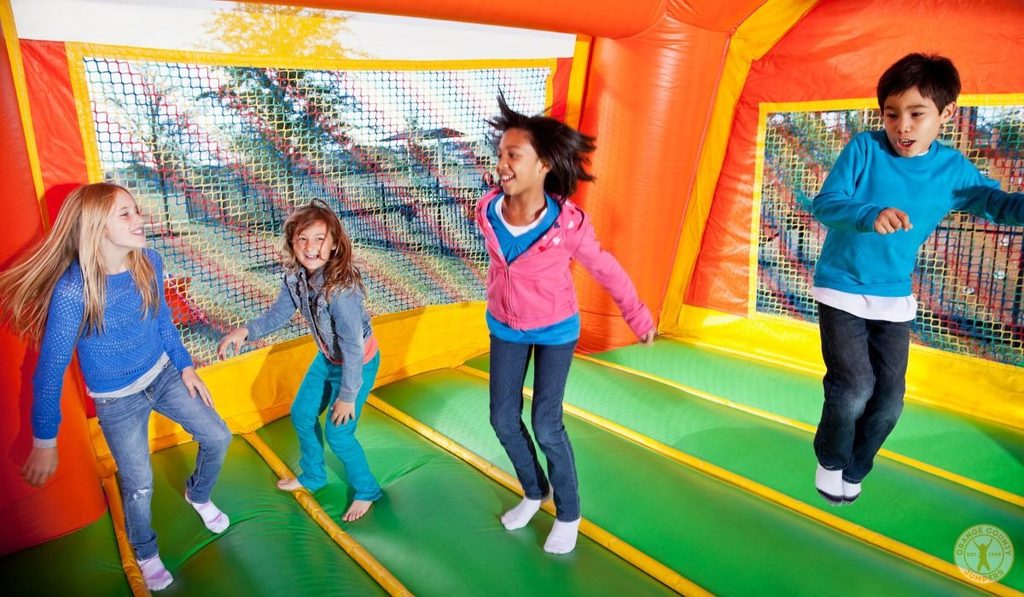
The same bounce house holds more small kids than big ones. A unit rated for 8 young grade schoolers might only handle 5 or 6 tweens comfortably.
Kids close in age group and size bounce more safely together too. Mixing a scrawny six-year-old with a couple of lanky eleven-year-olds is asking for a rough landing.
The Fun Starts Here!
Quick Example: Doing the Math
Let’s run the numbers. Say a unit is rated for 8 riders and 800 lbs total.
Eight 60-lb kids add up to 480 lbs, well under the limit, so the rider count of 8 is the real cap. Now swap in six 130-lb kids. Their combined weight hits 780 lbs, so weight becomes the limiting factor at 6, not 8.
The lower number always wins. Staying a bit under either max gives you a built-in safety buffer, which we always recommend. Browse our Standard Jumpers to see rated capacities side by side before you book.

What Happens When Too Many Kids Jump at Once?
Cramming too many kids into one unit isn’t just against the rules. It changes how the bounce house actually behaves.
Collisions Between Bigger and Smaller Kids
The CPSC’s hazard review flagged collisions as one of the most common injury patterns in inflatables, particularly when a bigger kid crashes into a smaller one mid-air.
Picture a ten-year-old landing hard right next to a four-year-old in a packed unit. Neither one saw it coming.
That’s why older kids and younger children rarely mix well in the same bounce session.
The Double Bounce Effect
Here’s the physics in plain terms: when a heavier kid lands, the floor pushes the air (and any lighter kids nearby) upward and sideways. That’s the “double bounce” effect, and it can knock a smaller jumper off balance fast.
Rough play makes it worse. Wrestling, flips, or piling on top of each other turns a fun bounce into a genuine fall risk.
Extra Strain on the Unit
It’s not only about the kids either. One manufacturer we’ve worked with notes that going over a unit’s rated weight can stress the fabric and seams and, in bad cases, cause sudden deflation mid-bounce.
Fewer participants at a time isn’t a buzzkill. It’s what keeps the party fun for everyone still in line.
Bounce House Safety Rules Every Host Should Follow
Good rules don’t ruin the fun. They’re what makes the fun last the whole party without a trip to urgent care.
Assign Active Adult Supervision
Every unit needs at least one adult watching it the entire time, ideally stationed right at the entrance. That adult decides how many kids go in and calls the shots when things get too wild.
Active supervision means eyes on the jumpers. Not on the grill. Not on your phone.
Run Rotating Groups by Age and Size
Split the guest list into different age groups and send them in for short, timed rounds. Younger kids first for five or ten minutes, then swap in the older crowd.
This trick works just as well at school events with dozens of kids waiting their turn.
Pre-Jump Checklist
Run through this list before anyone climbs in:
- Remove shoes, glasses, and jewelry
- Empty pockets of anything hard or sharp
- No food, drinks, or gum inside the unit
- No flips, wrestling, or pushing
- Kids leave the unit as soon as they’re told
Watch the Weather
Strong wind or rain means it’s time to pause the bounce house. A rain-slick floor turns into a slipping hazard fast, and gusty wind can shift a unit that isn’t fully anchored.
Most rental companies set a hard cutoff for wind speed (ours included), so ask about that policy up front.
If you’re planning a spring or fall party, keep an eye on Santa Ana wind conditions too. These aren’t rules meant to slow the party down. They’re safety guidelines built to back up whatever the manufacturer label already says.
How to Choose the Right Bounce House for Your Guest List
Picking the right bounce house isn’t about counting invites. It’s about counting bounces.
Count Jumpers, Not Total Guests
Base your choice on how many kids will realistically be jumping at once, not the number of children on the full guest list. Rotating groups mean a smaller unit can still serve a big party just fine, one round at a time.
Plan for Mixed Age Groups
Got a wide age range coming? A larger bounce house, stricter rotation schedule, or a combo unit can all help.
Combo units split kids across a slide and a bounce area, which naturally spreads out the action. Take a look at our Combo Jumpers if your guest list spans more than a few grades.
Consider Obstacle Courses for Bigger Events
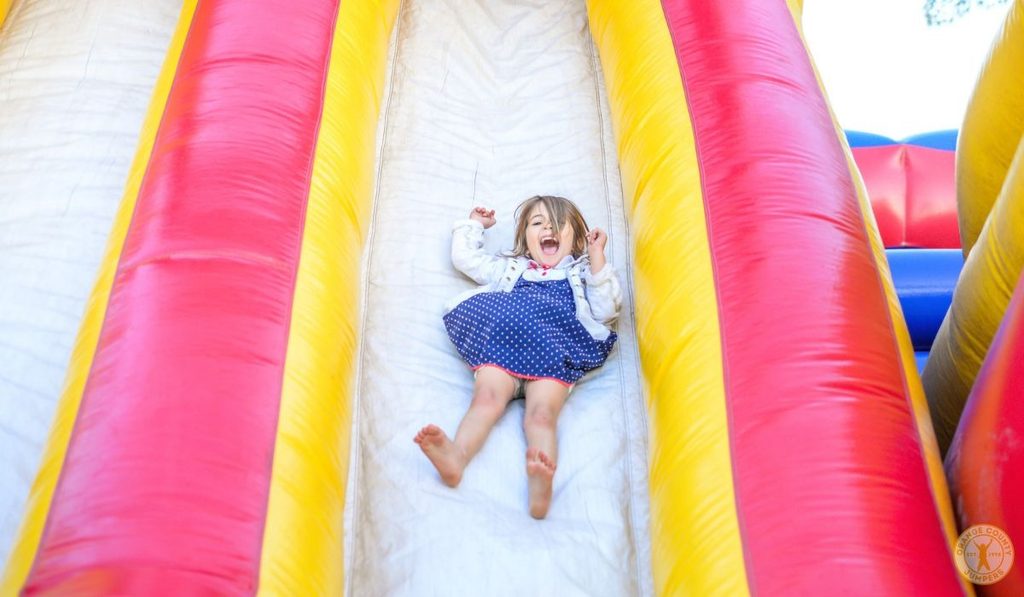
For school events or a crowd of older kids, obstacle courses move jumpers through in lanes instead of one open floor. It naturally limits how many kids collide at once. Check out our Interactives and Obstacles for options built with bigger groups in mind.
Confirm Setup Details With Your Rental Company
Before booking, ask your rental company these questions (we get them a lot, and for good reason):
- Is there a flat, clear spot free of sharp rocks and debris?
- Will a heavy duty tarp go under the unit?
- How will it be anchored? Stakes work on grass, while water bags or sandbags handle hard surfaces.
- What’s the unit’s actual rider and weight rating?
Final Thoughts
Safe capacity really comes down to three things. Check the label’s rider and weight limits. Group kids by size, not just age. And keep an adult watching the whole time.
That’s it. No guesswork needed.
Planning a party in Orange County or surrounding communities? Browse our standard jumpers and combo units to compare sizes, and our team can help you find a good fit for your guest list.
Every unit is commercially rated, sanitized, and inspected before it reaches your yard. Stop by our homepage to see what’s available for your date.